

Choosing the right lightweight packaging is no longer as simple as picking “a transparent bag.” As brands move toward cleaner, more sustainable, and more visually distinct packaging in 2026, glassine bags and cellophane bags have become two of the most frequently compared options.
Although they may look similar at first glance, they perform very differently — and each material fits a different brand story.
This article breaks down the differences clearly, using verified industry data where applicable, plus practical insights from manufacturing experience.
1. What Market Trends Are Driving This Shift?
Paper-based packaging continues to grow steadily
As more brands explore plastic-free alternatives, the demand for paper-based packaging remains strong.
According to Fortune Business Insights, the global paper packaging market is projected to grow from:
USD 376.53 billion (2024)
to USD 506.59 billion by 2032
CAGR 3.72%
Source:
This growth directly supports the rise of glassine bags, which are a refined form of paper packaging.
Biobased film materials are also expanding
Cellophane, a regenerated cellulose film, falls under the broader “cellulose films” category.
Grand View Research reports that the cellulose film market continues to grow due to its biodegradability and transparency, showing steady adoption across food, retail, and crafts packaging.
Source:
This validates the continued demand for clear display packaging with an eco-friendly positioning — the area where cellophane bags excel.
2. What Exactly Are Glassine Bags and Cellophane Bags?
Glassine Bags
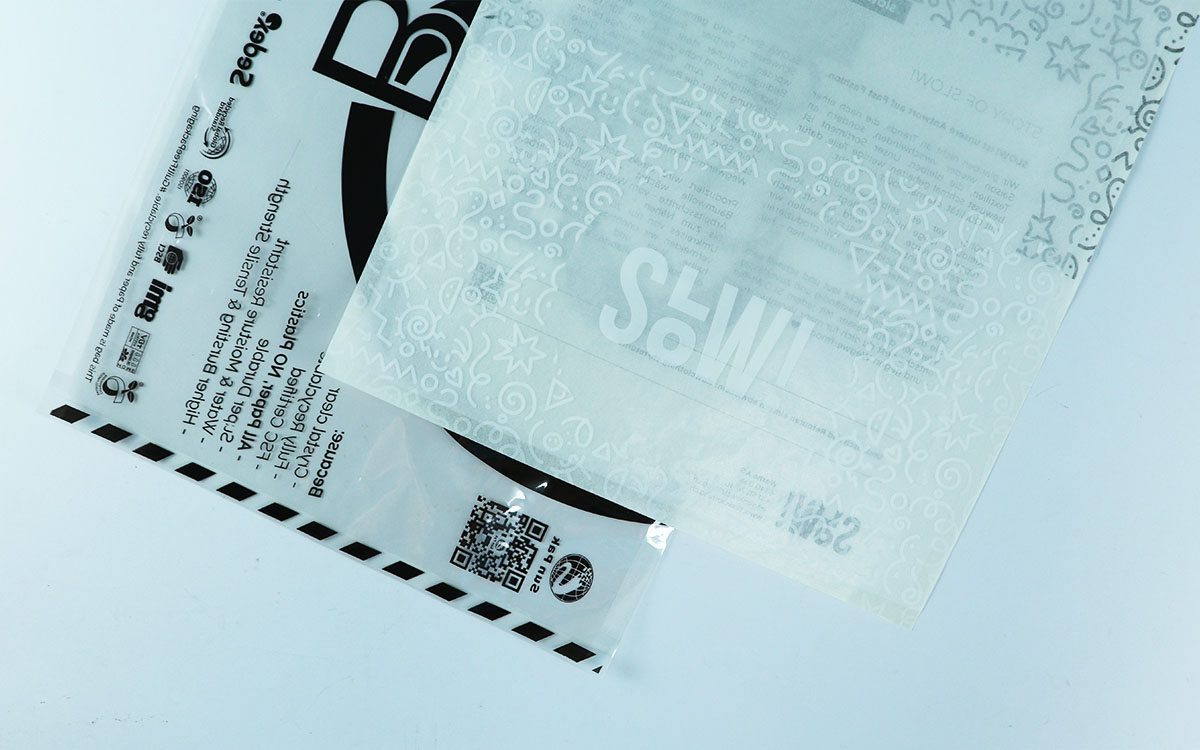
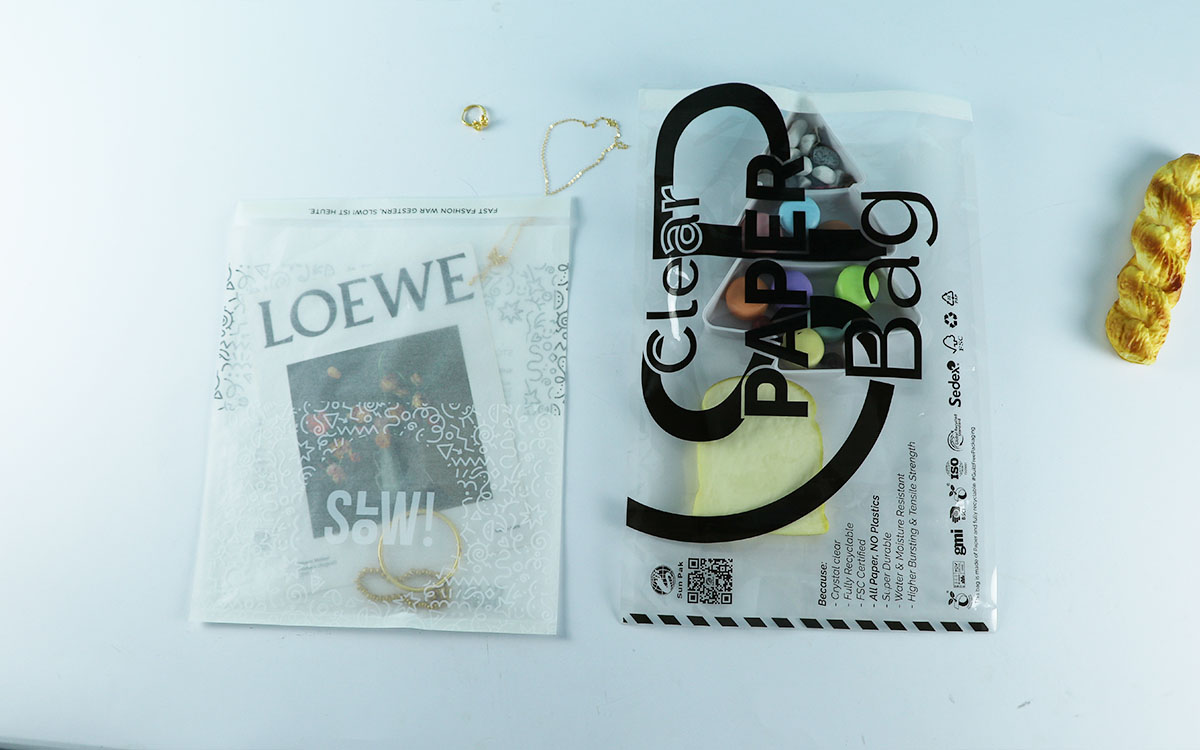
A smooth, dense, semi-transparent paper produced through supercalendering.
Key characteristics:
Matte, frosted transparency
Smooth and crisp texture
Acid-free, ideal for small retail goods
Recyclable in standard paper streams
Lightweight, premium aesthetic
Not waterproof
Commonly used for: jewelry, stationery, apparel accessories, branding inserts, small crafts.
Cellophane Bags
A thin, glossy transparent film made from regenerated cellulose.
Key characteristics:
Crystal-clear visibility
Flexible and smooth
More water-resistant than paper-based solutions
Naturally biodegradable; some grades are compostable
Ideal for product display and retail presentation
Commonly used for: gift packaging, craft items, bakery display, retail sets, handmade goods.
3. Side-by-Side Comparison
| Feature | Glassine Bags | Cellophane Bags |
| Transparency | Semi-transparent (frosted) | Fully transparent (crystal clear) |
| Appearance | Premium, minimal, paper-like | Bright, glossy, display-friendly |
| Sustainability | Fully recyclable as paper | Biodegradable; compostability depends on coating |
| Water Resistance | No | Yes |
| Touch & Feel | Crisp | Soft |
| Ideal Use | Branding goods, paper-forward packaging | Display packaging, moisture-sensitive items |
4. Which Material Fits Your Brand Better?
Choose Glassine if your brand values…
A paper-based, plastic-free look
Minimalist and clean presentation
Recyclable packaging
A matte, boutique aesthetic
Lightweight eco-forward materials
Glassine works especially well for stationery stores, jewelry brands, apparel accessories, and premium handmade goods.
Choose Cellophane if your brand needs…
High clarity for strong product visibility
Moisture resistance
A glossy, modern appearance
A biodegradable film option
A cost-effective transparent packaging choice
Great for candy shops, gifts, craft sellers, bakery displays, DIY kits, and retail sets.
5. What Many Buyers Overlook
1. They are not interchangeable
Even though both can be used for lightweight packaging, the look and performance are fundamentally different.
2. Both materials support an eco-friendly narrative — but differently
Glassine = recyclable paper
Cellophane = biodegradable film
Brands should choose the sustainability angle that matches their market and region.
3. Aesthetic matters more than people think
A jewelry brand using glossy cellophane often looks “cheaper” than necessary.
A gift shop using glassine loses out on visual impact.
Matching material to product category is key.
6. Final Recommendation for 2026
If your brand prefers a paper-forward, premium, recyclable experience → choose glassine bags.
If you need clarity + water resistance + biodegradability → choose cellophane bags.
Both materials align with 2026’s overall push toward cleaner, more eco-conscious packaging — the choice simply depends on your product’s visual and functional needs.
? If you need both materials, we can supply samples
We produce both glassine bags and transparent cellophane bags, and can help you compare thickness, sealing style, printing options, and cost based on your product category.