

For e-commerce brands, packaging is no longer just a protective layer. It plays a direct role in customer perception, brand recognition, and even repeat purchases. As online shopping continues to grow, more brands are choosing custom packaging bags to stand out while keeping logistics efficient.
This guide breaks down the most practical considerations when customizing packaging bags for e-commerce brands — from material selection to size planning and printing details — based on real manufacturing experience.
Why Custom Packaging Matters for E-Commerce Brands
Unlike retail packaging, e-commerce packaging must balance branding, protection, and shipping efficiency.
Most online sellers care about:
How the package looks when opened
Whether the material feels premium or cheap
If the bag protects products during shipping
How much it adds to shipping cost
Custom bags allow brands to control all these elements instead of relying on generic stock packaging.
Choosing the Right Material for E-Commerce Packaging Bags
Material selection is the first and most important step in customization.
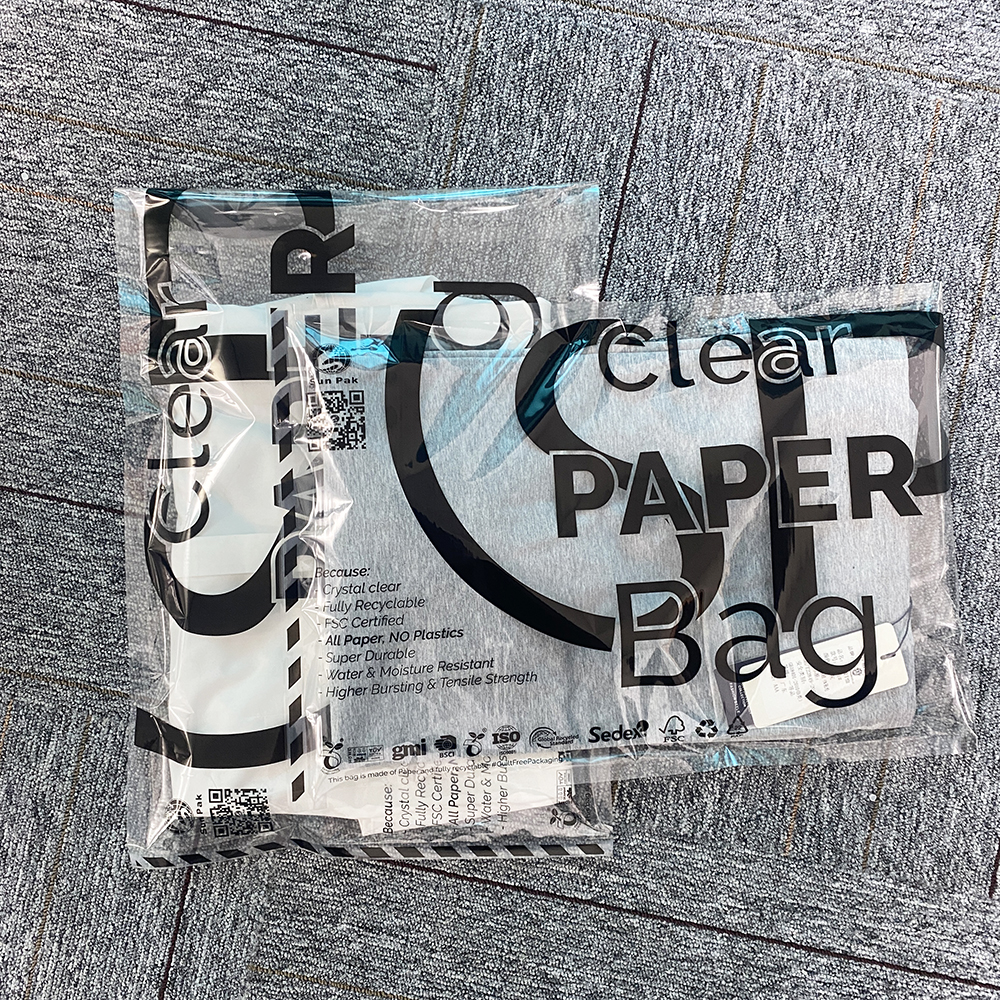
1. Cellophane Bags (Transparent & Waterproof)
Best for brands that want maximum product visibility.
Common uses:
Apparel inner packaging
Accessories and small goods
Gift sets
Products with visual appeal
Key advantages:
Fully transparent
Waterproof
Smooth surface for printing
Lightweight, shipping-friendly
Consideration:
Not plastic-free. Best suited for brands prioritizing presentation and moisture protection.
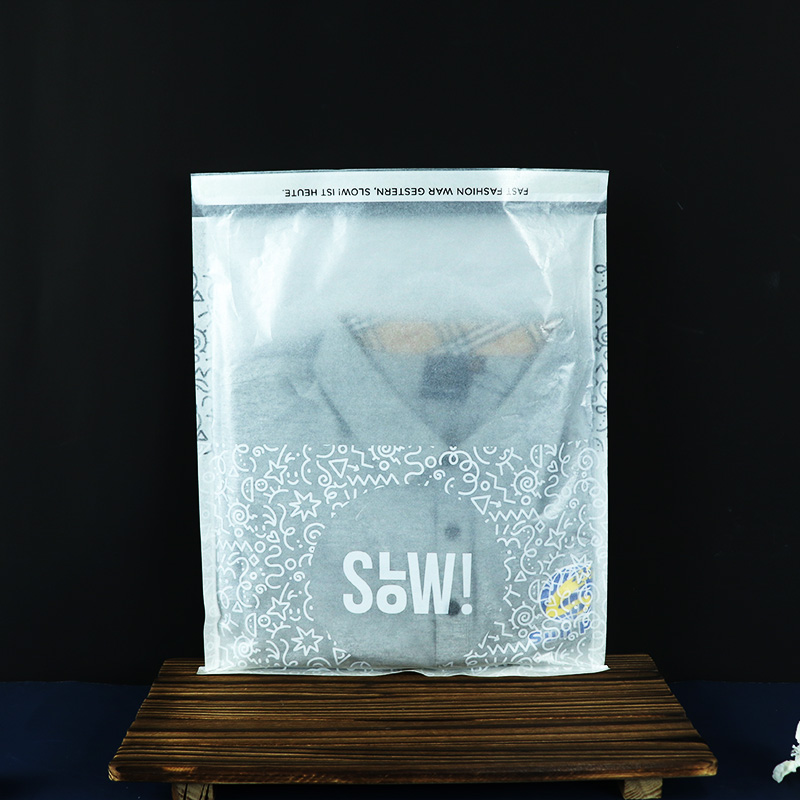
2. Glassine Bags (Semi-Transparent Paper Look)
A popular alternative for brands reducing plastic usage.
Common uses:
Clothing inner bags
Jewelry and stationery
Handmade and boutique items
Key advantages:
Paper-based and recyclable
Clean, matte appearance
Premium minimalist feel
Consideration:
Not waterproof or oil-resistant. Not suitable for wet or greasy products.
3. Kraft Paper Bags
Best for heavier or structured products.
Common uses:
Apparel shipping bags
Product kits
Subscription boxes (inner packaging)
Key advantages:
Strong structure
Easy branding
Eco-friendly image
Consideration:
Less transparent; branding relies more on printing.
4. Compostable or Recyclable Plastic Bags
Ideal for sustainability-focused e-commerce brands.
Examples:
PLA compostable bags
GRS-certified recycled PE bags
Key advantages:
Meets sustainability goals
Familiar performance for logistics
Suitable for international shipping
How to Choose the Right Bag Size
Sizing mistakes are one of the most common issues in custom orders.
Best practice for e-commerce brands:
Choose 2–3 core sizes instead of too many SKUs
Allow 10–15% extra space for easy packing
Consider thickness when calculating inner volume
Tip:
If your product range varies, factories often recommend designing one “main size” that covers 70–80% of orders.
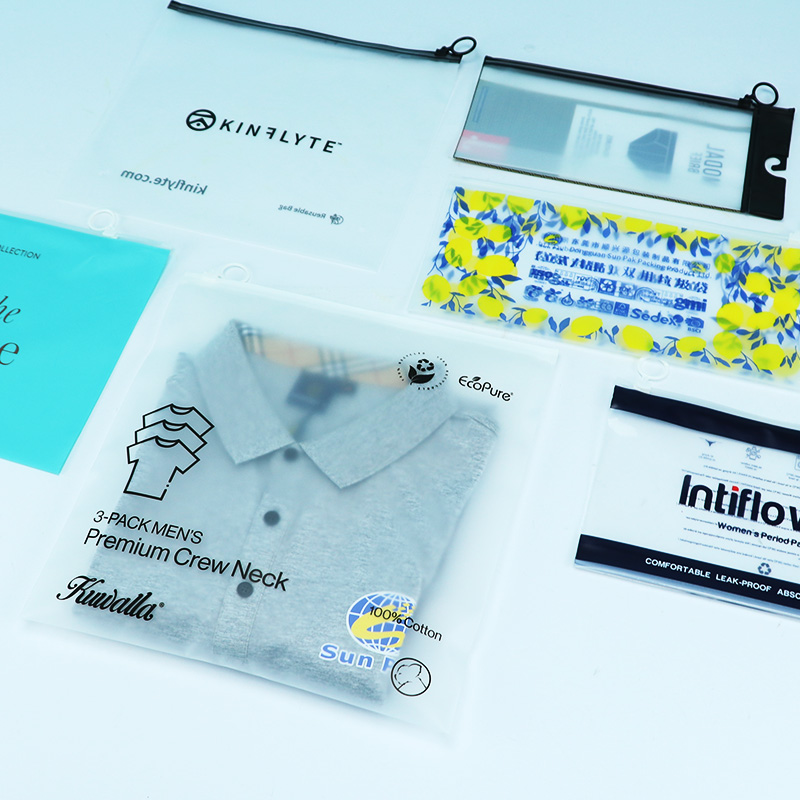
Printing Tips That Actually Work
Custom printing is where many brands overspend — or miss opportunities.
1. Keep the design simple
Logos, small icons, or one-line brand messages perform better than full-coverage designs.
2. Choose the right printing method
Gravure printing: Best for large orders with consistent branding
Flexographic printing: Cost-effective for simple designs
Offset printing: Suitable for paper-based bags
3. Color matters
On transparent or semi-transparent bags, lighter colors often look cleaner and more premium.
Common Mistakes E-Commerce Brands Make When Customizing Bags
Ordering too many sizes
Ignoring thickness and weight limits
Overcomplicated printing designs
Not testing samples before mass production
Choosing materials without understanding limitations
Working directly with a factory helps avoid these issues early in the process.
What Factories Need to Start a Custom Order
To speed up production, brands should prepare:
Bag type and material
Size and thickness
Printing artwork (AI/PDF preferred)
Estimated order quantity
Target delivery time
Clear communication reduces sampling time and unexpected costs.
Final Thoughts
Custom packaging bags give e-commerce brands control over presentation, protection, and brand consistency. By choosing the right materials, planning sizes carefully, and keeping printing practical, brands can create packaging that supports growth without increasing operational complexity.
For e-commerce businesses placing bulk orders, working with an experienced packaging manufacturer makes the customization process smoother and more cost-effective.