

Custom packaging is no longer just about putting a logo on a bag.
For brands ordering in bulk, customization affects cost, lead time, product protection, and brand perception. Many buyers start with a simple idea, only to realize later that material choice, size, printing method, and MOQ all matter more than expected.
This guide walks through the real customization process from a manufacturer’s point of view—so you know what to prepare before requesting a quote.
Step 1: Define the Purpose of Your Packaging Bag
Before choosing materials or printing, the first question should be simple:
What is this bag actually used for?
Different use cases require different materials:
Inner packaging for apparel or textiles
Retail display for accessories or stationery
Protection for shipping and storage
Eco-friendly packaging for brand positioning
For example:
Glassine bags work well for clean presentation and paper-based packaging
Cellophane bags are better for full transparency and moisture resistance
PLA compostable bags suit brands focusing on sustainability messaging
Clarifying the purpose early avoids unnecessary revisions later.
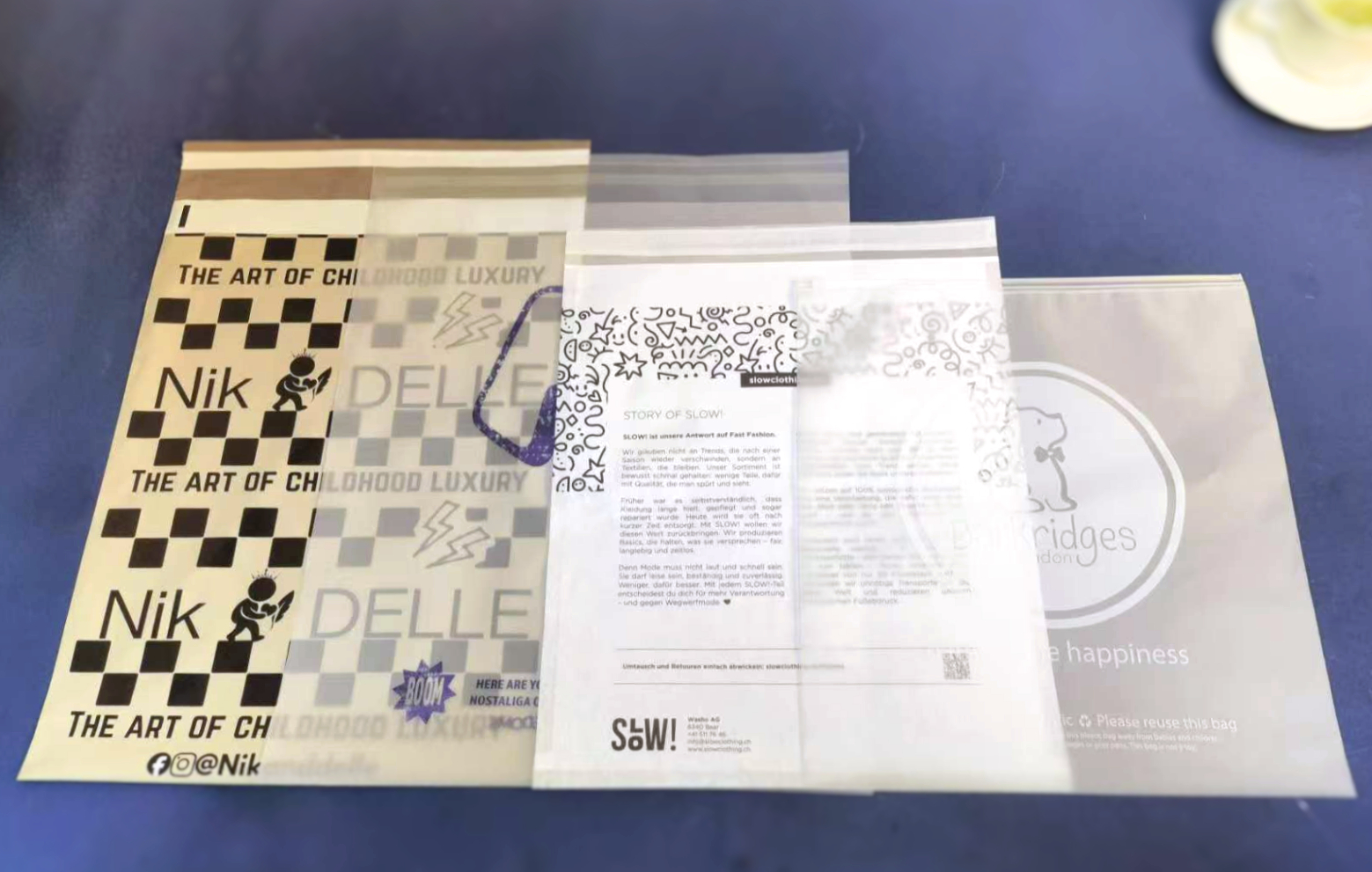
Step 2: Choose the Right Material
Material selection directly affects cost, durability, and customer experience.
Here’s how most bulk buyers decide:
Paper-based options
Glassine paper bags
Kraft paper bags
Best for brands that want:
Plastic-free packaging
A natural or premium paper look
Easy recycling
Limitations:
Not waterproof
Not suitable for oily or wet products
Plastic & transparent options
Cellophane bags
PE / OPP / CPP bags
Best for:
Retail display
Moisture protection
Full product visibility
Limitations:
Less eco-friendly unless recycled materials are used
Eco & compostable options
PLA compostable bags
GRS recycled plastic bags
Best for:
Sustainability-focused brands
Markets with plastic restrictions
Limitations:
Higher material cost
Specific storage and usage requirements
Step 3: Decide Bag Size and Thickness
One of the most common mistakes buyers make is choosing a bag that is too tight or too thin.
Manufacturers usually need:
Internal width × length
Product weight
Expected loading method
Thickness (GSM or microns) depends on:
Product weight
Required stiffness
Visual preference
Going thicker than necessary increases cost.
Going thinner than required increases complaints.
Step 4: Select Printing Method (or No Printing)
Not every custom bag needs printing.
Many brands choose:
Plain bags + stickers
Custom stamping
Simple logo printing
If you do print, common options include:
Flexographic printing (cost-effective for large quantities)
Gravure printing (high detail for premium branding)
Things that affect printing cost:
Number of colors
Ink coverage
Artwork complexity
Tip: Simple designs scale better and reduce unit cost.
Step 5: Understand MOQ and Lead Time
For bulk custom orders, MOQs are unavoidable.
Typical expectations:
Paper bags: lower MOQ
Plastic & compostable bags: higher MOQ
Printed bags: higher MOQ than plain bags
Lead time usually includes:
Artwork confirmation
Sample approval (if needed)
Mass production
Packing and shipping
Rushing production almost always increases cost.
Step 6: Prepare the Right Files for Custom Orders
To move faster, buyers should prepare:
Vector artwork (AI / PDF preferred)
Pantone color references
Bag size and material specification
Target quantity
Incomplete information is the #1 reason quotations get delayed.
Common Mistakes Bulk Buyers Should Avoid
Choosing material based only on appearance
Ignoring storage and shipping conditions
Over-printing small bags
Underestimating MOQ requirements
Treating all “eco bags” as the same
Avoiding these mistakes saves time, cost, and frustration on both sides.
Why Work Directly with a Packaging Bag Manufacturer
For bulk buyers, working directly with a factory offers:
Better pricing control
More customization options
Clearer communication on materials and lead time
Flexibility in packaging solutions
Factories also help adjust specifications based on real production experience—not just catalog options.
Conclusion
Customizing packaging bags is not complicated, but it does require clear decisions upfront.
When buyers understand materials, size, printing, and MOQ expectations, the process becomes smoother and more cost-effective.
For brands ordering in bulk, the right custom packaging is not just a container—it’s part of the product experience.